
Just Another Thing
As January 2026 comes to a close—yes, it’s already come and gone—the real question is this:
What’s next?
What have you decided to do with what you’ve read, reflected on, and considered this month?
Was this month-long blog just another thing you started…
something that lived briefly in January and will slowly fade into a vague memory of “that was good,” but never turned into action?
As January 2026 comes to a close—yes, it’s already come and gone—the real question is this:
What’s next?
What have you decided to do with what you’ve read, reflected on, and considered this month?
Was this month-long blog just another thing you started…
something that lived briefly in January and will slowly fade into a vague memory of “that was good,” but never turned into action?
This series wasn’t written to check a box.
It was meant to light a fire, jumpstart momentum, and propel you forward with encouragement and practical tools to help you elevate and execute the goals and desires we all know you have inside you.
And let me be clear—there’s no judgment here.
Every single one of us has room to grow. I believe growth should be continuous.
When the mind stops working, it loses its elasticity—its ability to stretch, adapt, and function effectively. Growth is a mental workout. It keeps your brain healthy, engaged, and alive.
While we may all experience mental challenges at times, we also have tools—reflection, learning, discipline, faith, community—to fight back and actively practice mental wellness.
Growth doesn’t always mean a major life shift. Maybe your next move is stepping into a new leadership role.
Or maybe it’s something simpler—learning a new instrument, taking a cooking class, starting a fitness routine, or reading a book that stretches your thinking.
Whatever it is, let your growth be excellent.
As we close this chapter, remember what we covered:
• Elevate your expectations
• Think differently
• Know when it’s time
• See it before you do it
• Make time for what matters
• Understand that how you move, moves others
• Know your why
These weren’t just posts. They were invitations. So don’t let this be just another thing.
Don’t let intention stop at inspiration.
Take one idea, one shift, one decision—and do something with it.
Make it count. Make it intentional. Make it yours.
January may be ending—but your growth doesn’t have to.
How has this post helped you? Please leave a comment and share your thoughts.

For the Love of What?
What drives you?
What ignites your desire to be better, to improve, to give the very best of yourself—especially when no one is watching?
Your why matters more than motivation. Motivation fades. Purpose sustains.
Our Creator made us on purpose, for a purpose. None of us are here by accident, and every one of us has the capacity to create impact. That impact might be for one person or for many—but significance is never measured by size. It’s measured by intention.
What drives you?
What ignites your desire to be better, to improve, to give the very best of yourself—especially when no one is watching?
Your why matters more than motivation. Motivation fades. Purpose sustains.
Our Creator made us on purpose, for a purpose. None of us are here by accident, and every one of us has the capacity to create impact. That impact might be for one person or for many—but significance is never measured by size. It’s measured by intention.
If you’re struggling to identify your purpose or find the initiative to want more for your life, pause and reflect—not on what you should be doing, but on what already lives inside you.
Ask yourself:
• What do I love?
• What do I get lost in when I’m doing it?
• Who am I doing this for?
• What change do I want to see in the world—or in my community?
• What part can I contribute to that change?
• How would I choose to live if fear, doubt, or limitation weren’t in the way?
• What am I willing to sacrifice to get there—time, effort, education, discipline, investment?
Purpose doesn’t always arrive fully formed. Often, it reveals itself through curiosity, service, and obedience—one step at a time.
There are countless books, talks, and teachings about the importance of your why. Not because it’s trendy—but because it’s essential. Your why grounds you when life feels unstable. It keeps you when quitting feels easier. It refreshes you when you’re tired, discouraged, or unsure.
Your why gives meaning to the work. It gives direction to the struggle. It turns effort into impact.
When you’re clear on your why, growth becomes intentional. Sacrifice becomes purposeful. Discipline becomes manageable. And progress—no matter how slow—feels worthwhile.
Your why is why it ALL MATTERS. It’s the reason you keep showing up. It’s the reason for improvement. It’s the reason your life, your choices, and your contribution are valuable.
So I’ll ask you again:
For the love of what?
Find that answer—and everything else begins to make sense.
How did this post help you? Please leave a comment and share your thoughts.

How You Move, Moves Others
What you say is bigger than the words that come out of your mouth.
It’s how you live.
Your life is a billboard—personally and professionally.
People are always reading it, even when you think they aren’t.
If you are a leader—or aspire to be one—how you move matters.
What you say is bigger than the words that come out of your mouth. It’s how you live. Your life is a billboard—personally and professionally. People are always reading it, even when you think they aren’t.
If you are a leader—or aspire to be one—how you move matters. Not just in meetings. Not just when things are going well. But in moments of pressure, discomfort, and decision-making.
What you do projects what you want to see in others.
Many people match energy. Very few walk into a room determined to set the energy—especially when the environment is heavy, tense, or uncertain. Leadership requires the courage to deposit clarity, steadiness, and respect even when it’s not being returned.
Communication is more than delivery—it’s understanding. How you communicate and how the people around you need to be communicated with carries real weight.
On my job, I try to communicate with the team I manage in a way that is clear and direct, but also welcoming and respectful. Still, there are moments when the message itself doesn’t feel good—when correction, accountability, or redirection is required. In those moments, the same approach isn’t always sufficient.
There’s a saying: teach people how to treat you. That teaching often comes through courageous conversations. I’ve had them with my leadership. And I’ve had them with the people I lead.
They aren’t always comfortable—but they are necessary.
Because when consistency and communication are missing or unclear, trust begins to erode. Loyalty weakens. People start questioning intent, stability, and safety.
And that doesn’t just impact performance—it impacts people.
When you move and model with confidence, purpose, integrity, fairness, honesty, and kindness (not coddling), you create space for others to do the same. People feel seen, supported, and secure enough to grow.
But when leadership is inflexible… power-driven… non-collaborative… or heavy-handed… It produces fear. Shrinkage. Anxiety. Self-doubt.
When leadership is disorganized, it creates a sense of instability— a lack of control and competence.
That calls direction into question. It disrupts security. And people stop feeling covered.
Your actions shape the emotional climate of every room you enter.
People may not remember every word you said—but they will remember:
• How safe they felt speaking up
• Whether expectations were clear
• If accountability was fair
• And whether your actions matched your values
Leadership isn’t about being perfect. It’s about being aware. Because how you live, lead, and move through the world is always speaking— even when you’re silent.
And the message you send has the power to either elevate people… or slowly diminish them.
Choose wisely.
How has this post helped you? Please leave a comment and share your thoughts,
Making Time for What Matters
Time is life. Period.
Every hour you’re given is a piece of your life you will never get back.
So when we squander time, we’re not just “being busy” or “falling behind”—we’re spending life on things that don’t deserve it.
The challenge is that being a good steward of time often loses in the hierarchy of everything else we feel pressured to do—or choose not to do.
Time is life. Period.
Every hour you’re given is a piece of your life you will never get back.
So when we squander time, we’re not just “being busy” or “falling behind”—we’re spending life on things that don’t deserve it.
The challenge is that being a good steward of time often loses in the hierarchy of everything else we feel pressured to do—or choose not to do.
Whether you find yourself on the side of mediocrity (doing just enough to get by) or on the side of overachievement (constantly producing, pushing, and performing), there are things at both ends of the spectrum that get neglected.
For some, it’s growth. For others, it’s rest. For many, it’s alignment.
If you are a believer, your spiritual relationship is paramount.
Not optional. Not secondary. Foundational.
What are you doing—intentionally—to strengthen that connection? Quiet time. Prayer. Reflection. Listening. Not when it’s convenient—but because it matters.
Your health is just as critical. Your body is a temple, not a machine. Running it into the ground and calling it “grind” is not discipline—it’s neglect. After those two priorities, everything else flows better—or falls apart faster.
Then there’s work.
Are you just completing tasks randomly… or do you have a system? Because activity without structure leads to exhaustion. But effort with organization leads to excellence.
Proper time management and prioritization make room for what matters most. They turn chaos into clarity. They allow you to do more than the bare minimum.
Systems work.
When you have a plan:
• You exceed expectations instead of just meeting them.
• You stop reacting and start leading.
• You create space for growth, creativity, and rest.
Create a planner. Develop a schedule. Time-block your priorities.
If necessary, commit to waking up earlier—or using one focused hour before bed. Not forever. But long enough to build momentum.
You are capable of so much more than survival mode. So much more than checking boxes. So much more than “I’ll get to it someday.”
When time is spent intentionally, life expands. Peace increases. Progress becomes visible.
Make time for what matters— because how you spend your time is how you spend your life.
How did this post help you? Please leave a comment and share your thoughts.

See It Before You Do It
Change begins in the mind long before it shows up in real life.
Before we move, we imagine.
Before we act, we see.
That’s why change can feel so hard when someone else sees what we need before we do—or when we see it, but no one else understands yet. Vision doesn’t work unless the person carrying it believes it.
Change begins in the mind long before it shows up in real life.
Before we move, we imagine. Before we act, we see.
That’s why change can feel so hard when someone else sees what we need before we do—or when we see it, but no one else understands yet. Vision doesn’t work unless the person carrying it believes it.
You can’t act on a change you’re not convinced is:
1. Necessary
2. Achievable
3. Desired
If any of those are missing, action feels forced… and forced change rarely lasts. Self-reflection is awareness. It’s recognizing that something isn’t working anymore.
But self-actualization is ownership. It’s deciding, “I’m ready to do something about it.” Knowing something needs to change is only the beginning.
The real work is imagining what that change should look like in your life—clearly, honestly, and without shortcuts.
Once you can see it, you can map it. Once you map it, you can move. But first, you have to identify what’s holding you back.
For years, I wanted to write a book.
The desire was there, but the movement wasn’t.
Then I met a gentleman who was a marketing consultant—someone who had written multiple books. Not massive, overwhelming projects, but short, impactful reads that sparked curiosity and led people to action. That moment shifted something in me.
I thought, I can do this.
But before I started, I had to face my barriers:
• Time
• Lack of knowledge about the process
• Fear
Fear asked the loudest questions:
Will anyone care?
Will this matter?
Is what I have to say valuable?
Instead of ignoring those questions, I answered them. I carved out time—because mornings before 10:00 AM are when I’m most focused. I researched the process and found resources that could guide me. And I faced fear head-on by seeing myself as an author before I ever became one.
Once I could see it, I could pursue it.
The steps you take matter—and they are often ordered.
Clarity comes before courage. Vision comes before movement. Belief comes before results.
Seek confirmation during your quiet time. That’s where alignment becomes clear. That’s where conviction is strengthened. And don’t let doubt speak louder than your affirmations.
If you know something needs to happen in your life, don’t rush the process—but don’t ignore it either.
See it. Name it. Imagine it. Plan it.
Then take the next right step.
Change doesn’t start when you move. It starts when you believe you’re ready.
And when you’re ready, movement will follow.
How did this post help you? Please leave a comment and share your thoughts.

Knowing When It’s Time
Let’s talk about expiration dates.
What do they really mean?
And why do they even exist?
Expiration dates aren’t there to scare us. They exist to protect us. They let us know when something is no longer at its best, no longer safe, no longer effective.
Let’s talk about expiration dates.
What do they really mean?
And why do they even exist?
Expiration dates aren’t there to scare us. They exist to protect us.
They let us know when something is no longer at its best, no longer safe, no longer effective. Not because it was bad—but because time, conditions, and growth changed its usefulness.
Milk doesn’t expire because it failed. Medicine doesn’t expire because it didn’t work hard enough. Food expires because it was designed for a season, not forever.
And life works the same way.
Some things in our lives have expiration dates too— habits, relationships, routines, mindsets, roles, even versions of ourselves. Just because something once served you doesn’t mean it’s meant to serve you forever.
What was once helpful can become heavy. What was once necessary can become limiting. What was once aligned can become outdated as you grow.
Setting an expiration date isn’t being ungrateful. It’s being honest.
It’s okay to say:
• “This no longer fits who I am.”
• “I’ve outgrown this space.”
• “This no longer adds value to my life.”
• “I need a boundary here.”
• “This season is complete.”
Expiration dates create clarity. They protect your peace. They prevent you from holding on to things that quietly drain you.
And here’s the beautiful part—
When something reaches its expiration date, you have options.
You can let it go. You can replace it with something better. Or you can refresh it—if it still has purpose and aligns with who you’re becoming.
Growth requires regular evaluation.
What still serves me?
What no longer does?
What needs to be released so something new can grow?
You don’t owe permanence to anything that no longer supports your purpose. Sometimes the most powerful thing you can do is read the label… and choose what’s best for you.
How did this post help you? Please leave a comment and share your thoughts.
Think Differently
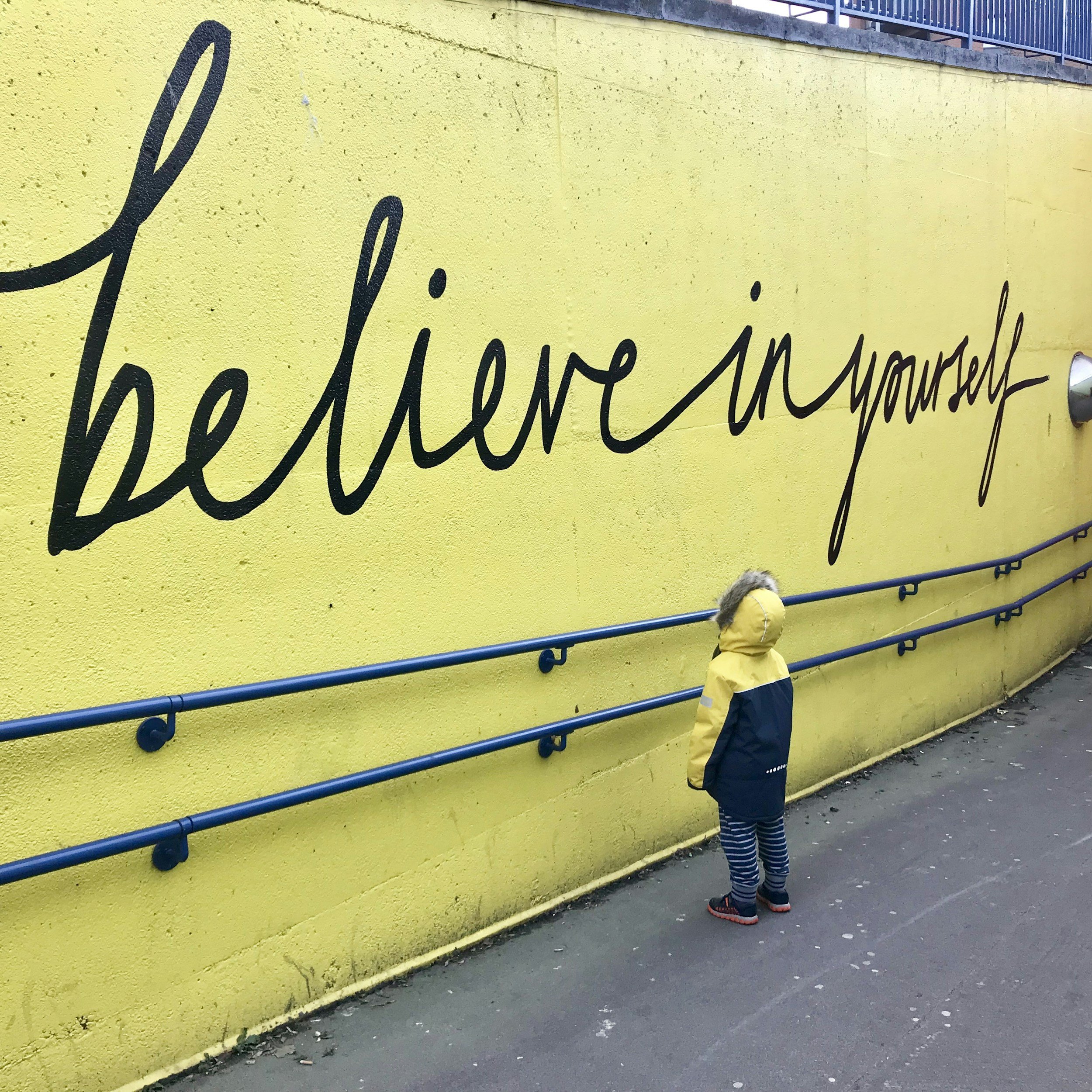
Positive thinking isn’t pretending everything is perfect.
It is not denying your challenges, suppressing your emotions, or putting on a mask of false strength.
Positive thinking is making a conscious choice to focus on what God is doing in you instead of what the world is doing around you.
Positive thinking isn’t pretending everything is perfect.
It is not denying your challenges, suppressing your emotions, or putting on a mask of false strength.
Positive thinking is making a conscious choice to focus on what God is doing in you instead of what the world is doing around you.
It is the daily decision to elevate your thoughts above your fears, to speak life where doubt tries to settle, and to expect goodness even in seasons that feel heavy.
Faith moves you.
Courage grows you.
Vulnerability frees you.
These three work together like gears in a powerful machine—each one pushing the next forward, each one unlocking a new dimension of your influence.
When I wrote R.E.A.C.H., I understood something transformative: Influence doesn’t begin with what you say to others—it begins with what you speak to yourself.
It starts internally, long before it ever becomes external. The way you think shapes the way you act. The way you act shapes the way others experience you. And the way others experience you shapes their own possibility.
Your life—your mindset, your faith, your courage—is showing someone else what is possible. And that is why changing your thinking is one of the greatest gifts you can offer the world.
We often underestimate this truth: Your growth does not stop with you. Your growth inspires families, teams, friendships, classrooms, and entire communities.
Your growth can change a child’s outlook, a partner’s confidence, a colleague’s motivation, or a stranger’s hope. Your elevation can spark the desire for elevation in others.
When you commit to becoming better, you silently whisper to others:
“You can become better, too.”
You give people permission to dream again.
You remind them that change is possible, healing is possible, and a fresh start is always within reach.
But influence—real influence—requires honesty. It requires looking at yourself without filters or excuses. It requires saying, “I don’t have it all figured out—but I’m willing to grow.”
It requires stepping into rooms where you may feel unqualified but choosing to show up anyway. It requires faith that God is not done writing your story, even when you struggle to see the next page.
One of the greatest commitments you can make this year is this:
Keep the promises you make to yourself.
Not the promises you make for approval, applause, or validation, but the quiet commitments that shape your character and your capacity.
Write them down.
Plan them out.
Follow your strategy.
Give your goals the same urgency you give your fears.
Don’t sleep on yourself. Don’t shortchange your potential. Don’t shrink your dreams to make room for doubt. Invest in you—because you are absolutely worth it. The world benefits when you rise. Your influence multiplies when you choose growth. The future shifts when you dare to believe again.
So today, lead with faith. Think with intention. Speak with courage. And live with the kind of vulnerability that invites transformation—not only in you, but in everyone connected to you.
How did this post help you? Please leave a comment and share your thoughts.
Elevate Your Expectations
“Elevate Your Expectations”
Confidence doesn’t always arrive with a bold entrance. Sometimes, it builds quietly, step by step, as we show up for ourselves day after day. It grows when we choose to try, even when we’re unsure of the outcome. Every time you take action despite self-doubt, you reinforce the belief that you’re capable. Confidence isn’t about having all the answers — it’s about trusting that you can figure it out along the way.
Confidence doesn’t always show up loudly. More often, it’s built quietly—in the moments when you choose yourself, day after day. It grows every time you step forward, even when you’re unsure, even when self-doubt is present. Each action you take reinforces the truth that you are capable. Confidence isn’t about having everything figured out; it’s about trusting yourself enough to learn and adjust as you go.
Making things happen isn’t about waiting for the “right” time—it’s about starting where you are with what you have. Big goals can feel heavy when you look at them all at once, but progress is created through small, consistent steps. Whether you’re pursuing something personal or professional, growth comes from showing up—not perfectly, but faithfully. Action brings clarity, and over time, those steps turn into real movement.
You don’t have to be fearless to move forward; you just have to be willing. Willing to try. Willing to learn. Willing to believe there’s more in you than you may see right now. The journey won’t always be smooth, but growth never is. What matters is that you keep going, keep growing, and keep believing in the person you’re becoming.
As I sit here contemplating my endeavors for the coming year, I glance over at my vision board—my yearly roadmap, my reminder, my quiet accountability partner. I wanted to reflect on what I accomplished in 2025 and what still sat undone. And something interesting caught my attention:
The entire right side of my board had been conquered… but the left side remained untouched.
At first, I laughed to myself and thought,
“Maybe I should move the goals on the left side over to the right. Maybe that’s where the action happens. Maybe that’ll activate something.”
But then it hit me—it was never about the placement on the board. It wasn’t the position of the goals; it was the position of my mind.
The right side of that board represented what I prioritized, what I believed was necessary, and what I intentionally pursued with focus. I accomplished those things not because they were on the “right,” but because I made the right decisions about what mattered in that season.
Last year, intention shaped my elevation. I wrote my book R.E.A.C.H. I stepped into a new leadership role. I completed my academic journey—for now.
These weren’t accidents. These were outcomes of a mindset shift. These were victories born from choosing what aligned with my purpose and taking action even when it stretched me.
And that’s when I realized something about the new year:
Health will be my wealth.
Elevation will be my focus.
Financial freedom will be my pursuit.
And God will remain my source, my strength, and my strategy.
Just as I chose to rise last year, I can choose to rise again.
Because transformation doesn’t start with a task list— it starts with the thoughts that drive the task list.
When I changed my thinking, I changed my life. And not just mine—my growth ignited growth in others. My elevation became an inspiration for the people connected to me.
So as we step into 2026 together, let’s make a promise to ourselves:
Let’s reset how we think.
Let’s recondition what we expect.
Let’s choose what matters with purpose and conviction.
Because to be different, you must think differently. And when you think differently, you move differently. And when you move differently, your entire trajectory changes.
If God helped me do it last year,
He will empower me to do it again this year—and He’ll do the same for you.
Here’s to a mindset reset and a year of unstoppable elevation.
How did this post help you? Please leave a comment and share your thoughts.

Welcome to The R.E.A.C.H. Reset — a month-long personal development blog designed to take you from expectation to elevation as you recondition your Expectations, Achievements, Confidence, and Happiness.
A year ago, I released my book R.E.A.C.H., and the feeling of accomplishing something so meaningful was absolutely exhilarating. As we enter 2026, I’m resurfacing the heart of that message with new depth, new perspective, and new fire.
This January, we’re diving into real growth—the kind that renews your mindset, strengthens your faith, fuels your confidence, and elevates every area of your life. Each week, we’ll explore two powerful chapters from R.E.A.C.H. and break down how to apply them in your daily decisions, leadership, relationships, and purpose.
This blog is a reminder that you are not stuck—you are becoming.
When you choose to invest in yourself, you move boldly from expectation to elevation. And the transformation doesn’t stop with you—it inspires your family, your team, your community, and even the world.
Welcome to a new year of intention, elevation, and unstoppable growth.